
What neurorehabilitation is and why it matters
Neurorehabilitation is a targeted recovery programme after damage to the brain, spinal cord or peripheral nerves. The aim is to restore as much independence as possible: standing and walking safely, using the arm and hand, looking after oneself and, where possible, returning to work and to the activities the person enjoys.
The most common reason for neurorehabilitation is stroke. According to figures reported by Hina, the Croatian news agency (29 October 2025), about 13,000 people in Croatia have a stroke every year. Stroke is one of the leading causes of long-term disability in adults, and much of that disability can be reduced through good rehabilitation.
After damage, the brain can partly reorganise itself. This process is called neuroplasticity: healthy parts of the brain gradually take over some of the tasks of the damaged areas. Neuroplasticity does not happen by itself. It is stimulated by repetition, practising specific tasks and a sufficient amount of therapy.
The most common conditions in neurorehabilitation
- Stroke: weakness of one side of the body, problems with balance, speech, swallowing or memory. We write in detail about the early stage in our article the first months after a stroke.
- Brain injuries: after road accidents, falls or brain surgery.
- Spinal cord injuries: weakness or paralysis of the legs, and sometimes the arms, with disturbances of sensation and bladder control.
- Chronic neurological diseases: for example Parkinson's disease or multiple sclerosis, where rehabilitation helps to preserve mobility and balance.
- Peripheral nerve damage: weakness or altered sensation in the arms or legs.
Each of these conditions has its own particular features, but the goals are shared: moving safely, preventing the complications of long periods lying in bed and as much independence as possible.
Time matters: the early and later stages
After a stroke, the fastest progress usually happens in the first weeks and months. That is why rehabilitation begins in hospital, as soon as the condition is stable, and continues without a long gap after discharge.
How much therapy a person receives also matters. The 2023 NICE guideline recommends rehabilitation, according to need, of at least three hours a day, at least five days a week, across different types of therapy. If the person cannot tolerate that much, therapy still takes place five days a week, but for less time. At home, with a few outpatient appointments a week, this intensity is hard to achieve.
Early does not mean forced. A large international study showed that very intensive getting up in the first 24 hours after a stroke does not improve the outcome; it reduces the chances of a good recovery, so the start and the pace are set by the medical team. Recovery continues after six months too, more slowly, so even then it is not too late for targeted rehabilitation.
What helps recovery
A neurorehabilitation programme is put together after an assessment and changes as progress is made. It most often includes:
- Verticalisation: gradually bringing upright a person who has been lying down for a long time or cannot stand unaided, while blood pressure and pulse are monitored. More in our article verticalisation and balance.
- Gait training: from the first supported steps to walking on uneven ground. For people who cannot walk on their own, robot-assisted gait training alongside conventional physiotherapy increases the chances of walking independently, especially in the first months.
- Individual exercise therapy: exercises for strength, movement control and range of motion, with a focus on the affected side of the body.
- Balance exercises: for safer standing and walking and a lower risk of falls.
- Arm and hand exercises: repeating everyday tasks, from grasping to dressing.
- Work in water: in the therapy pool, buoyancy makes movement and standing easier, subject to a safety assessment.
- Education for the patient and family: safe transfers, fall prevention, adapting the home. We write about this in our article how the family can help.
After a stroke, other specialists are often needed too, for example a speech and language therapist for speech and swallowing, an occupational therapist for everyday activities and a psychologist. Which therapies are needed is assessed by the doctor on the basis of the medical reports.
How progress is monitored
In neurorehabilitation, progress is not judged only by the impression that “he's better today”. The team uses standardised tests and scales that are repeated during the stay, for example an assessment of independence in everyday activities, balance tests, walking speed over a set distance and the distance a person covers in a few minutes.
Such measurements have two kinds of value. They show which part of the programme is working and which needs to change, and they give the patient and family tangible evidence of progress at times when recovery seems to have stalled. Goals are set together with the patient: not an abstract “better walking”, but something concrete, for example going to the bathroom independently or walking to the corner shop.
Questions for the doctor at discharge from the neurology ward
Before discharge from hospital, it is useful to ask:
- What kind of stroke was it, and what are the main effects?
- Has swallowing been assessed, and is an adapted diet needed?
- Which medicines does the patient continue taking and why, and when is the next check-up?
- What kind of rehabilitation is recommended, how intensive and from when?
- What does the family need to learn before the return home?
Write down the answers, and bring the discharge letter and medical reports to the first appointment with the rehabilitation physician.
Complications to prevent
As well as restoring function, good rehabilitation reduces the risk of common complications:
- falls: due to weakness, balance problems and reduced awareness of the affected side
- painful shoulder: the weak arm must not be left hanging or be pulled on during transfers
- stiffness and spasticity: correct positioning and regular movement of the joints
- pressure sores and thrombosis: in people who spend a lot of time lying down
- pneumonia due to swallowing difficulties: a swallowing assessment before eating and drinking
- depression: it is common after a stroke and can be treated, so changes in mood are worth mentioning to the doctor
When to call emergency services straight away
Signs of a stroke: call 112 (the European emergency number) immediately if you notice sudden:
- drooping of the corner of the mouth or one side of the face
- weakness or numbness of an arm or leg on one side of the body
- difficult, slurred or incomprehensible speech
- loss of vision in one or both eyes, double vision
- a severe headache with no known cause
- loss of balance or coordination
Note the time when the symptoms started. Treatment in the first hours can reduce brain damage. Do not wait for the symptoms to pass, even if they go away within a few minutes.
In a person who is already recovering from a stroke, call 112 immediately if new weakness, worsening speech, sudden confusion or a seizure appears, because this can be a sign of a new stroke. Contact a doctor the same day if coughing or choking while eating, a swollen and painful leg or a fever appear. If breathing difficulty or chest pain occurs together with a swollen leg, call 112 immediately.
Inpatient or outpatient neurorehabilitation
People who need help with transfers, care or supervision during the day and night, and those who need several hours of therapy a day, usually gain more from inpatient rehabilitation. Mobile patients with support at home can continue as outpatients.
When deciding, it is worth taking the family into account too. Caring for a person after a stroke is physically and emotionally demanding, especially in the first weeks, when needs are greatest and the family has not yet learned how to help safely. An inpatient stay during this period gives the family time to prepare the home, organise help and learn what is needed, while the patient receives daily therapy. The two forms are often combined: an intensive inpatient programme in the early stage, then outpatient therapy and exercises at home. We compare them in our article inpatient or outpatient rehabilitation.
How we do it at Zelendur
Specijalna bolnica Zelendur in Samobor is the first private specialty hospital for physical medicine and rehabilitation in Croatia. Before admission, our doctors review the medical records and assess whether the inpatient programme at Zelendur is suitable at this stage for you or your loved one.
- Admission in three steps. A medical examination, a nursing assessment and a physiotherapy assessment, each lasting about 45 minutes.
- A personal plan. The plan is adjusted every day, and you get your schedule for tomorrow (when, where and with whom) the day before.
- Therapies throughout the day. Monday to Friday 8 am to 7 pm, Saturday 8 am to 3 pm, with rest between therapies.
- Equipment for walking and balance. Robotic systems for verticalisation and gait training, a 60 m² pool 1.30 m deep and an outdoor therapy terrain with uphill and downhill slopes and uneven ground.
- Safety. Round-the-clock nursing care, hospital rooms with hospital beds, step-free spaces with wide doors and corridors for wheelchairs.
- We measure progress. We track progress with measurements, not just by impression.
Is your loved one recovering from a stroke or another neurological condition? If you are not sure what is best for you, get in touch: we will review your medical records free of charge and suggest the next step.
Frequently asked questions
How long does it take to recover from a stroke?
The fastest progress usually happens in the first three to six months, but for many people recovery continues after that, more slowly. The length and outcome depend on the size and location of the damage, general health and the intensity of rehabilitation. The team sets realistic goals after an assessment.
When should rehabilitation start after a stroke?
Rehabilitation begins in hospital, as soon as the condition is stable, and continues straight after discharge. Very intensive getting up in the first 24 hours has not proved beneficial; it reduced the chances of a good outcome, so the pace is set by the medical team. It is important that there is no long gap between hospital and rehabilitation.
Can you walk again after a stroke?
Many people walk again after a stroke, independently or with an aid, but this depends on how severe the damage is. Regular gait training improves the chances, and for people who cannot walk on their own, robot-assisted training alongside conventional physiotherapy can help further. The outcome cannot be promised in advance, but progress can be measured.
What are the first signs of a stroke?
The most common are sudden drooping of one side of the face, weakness or numbness of an arm or leg on one side and difficult or slurred speech. Sudden loss of vision, a severe headache or loss of balance can also occur. Call 112 (the European emergency number) immediately; every minute counts.
What is verticalisation?
Verticalisation is gradually bringing upright a person who has been lying down for a long time or cannot stand unaided, while blood pressure and pulse are monitored. It can help circulation, breathing, alertness and the bones, and it prepares the body for standing and walking. It can be done with a tilt table or robotic systems.
Can the family take part in rehabilitation?
Yes, and they should. The family helps through motivation, repeating the exercises the therapist has shown and preparing the home. It is important that family members learn to help safely with getting up and walking, but that they do not do everything for the patient.
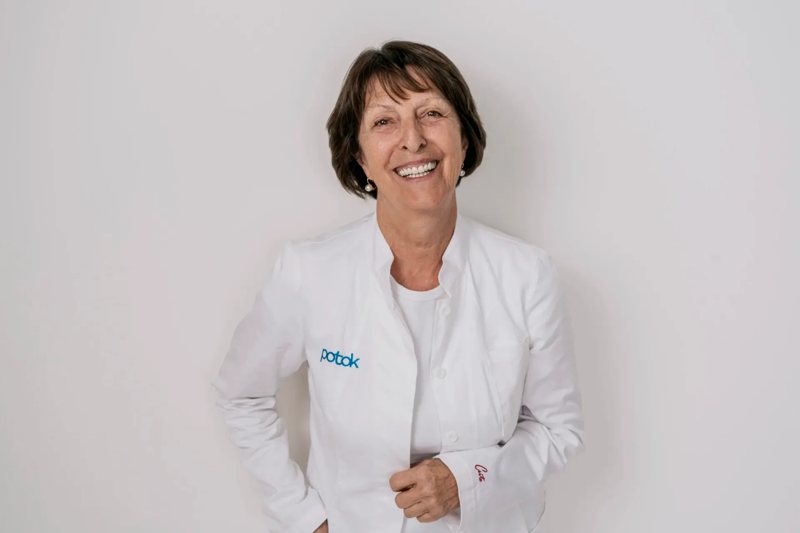
Specialist in physical medicine and rehabilitation with more than four decades of clinical experience. In 1995 she opened a private specialist practice, and in 2008 Poliklinika Potok in Sveta Nedelja, which she ran until December 2025. Her experience with outpatients and with patients from abroad led to the idea of Zelendur: a hospital where accommodation and rehabilitation are in one place.
Biography and articles →Next content review: 18 May 2027. This text is for information only and does not replace an examination by a doctor.
Sources
- Stroke rehabilitation in adults, guideline NG236 (NICE, 2023): nice.org.uk/guidance/ng236
- Guidelines for adult stroke rehabilitation and recovery (American Heart Association and American Stroke Association, 2016): ahajournals.org
- Rehabilitation, fact sheet (WHO): who.int/news-room/fact-sheets/detail/rehabilitation
- Mehrholz J. et al., Electromechanical-assisted training for walking after stroke, systematic review (Cochrane, 2020): cochranelibrary.com
- Moždani udar u Hrvatskoj godišnje pogodi 13 tisuća ljudi (Hina, republished by Index.hr, 29 October 2025): index.hr/vijesti/clanak/mozdani-udar-u-hrvatskoj-godisnje-pogodi-13-tisuca-ljudi/2725339.aspx