
What verticalisation is and why it matters
Verticalisation is gradually bringing upright a person who has been lying down for a long time or cannot stand unaided. It is done step by step: from raising the head of the bed and sitting on the edge of the bed to standing with support, while blood pressure, pulse and general condition are monitored throughout.
The body is built for an upright position. Even a few days of lying down weaken the muscles, bones and cardiovascular system. In people after a stroke, a spinal cord injury, major surgery or a long stay in hospital, verticalisation is often the first step towards walking again.
What verticalisation brings
- Cardiovascular system: the body learns again to regulate blood pressure in an upright position.
- Breathing: the lungs expand better, and the risk of pneumonia may be reduced.
- Bones and joints: loading the bones slows the loss of bone mass, and standing prevents muscle shortening and joint stiffness.
- Digestion and urination: an upright position helps the bowel and bladder to work.
- Alertness and mood: seeing the world from an upright position encourages attention, communication and motivation.
- Preparing for walking: the legs, trunk and balance get used to carrying body weight again.
What the procedure involves
Verticalisation is planned according to the patient's condition and with the doctor's approval. The typical steps are:
- Sitting up in bed with the head of the bed gradually raised.
- Sitting on the edge of the bed with feet on the floor, supported by the therapist.
- Moving upright with an aid: a tilt table that is gradually raised towards a vertical position, a standing frame or a robotic system that provides support and, with some devices, moves the legs.
- Standing with support, briefly at first, then for longer and longer.
- First steps with a walking aid, a therapist or robot-assisted gait training.
Throughout the procedure, the therapist monitors how the patient tolerates being upright. The duration and progression are always individual.
Orthostatic hypotension: why we go slowly
After lying down for a long time, the body is less able to regulate blood pressure when moving upright. Blood pools in the legs, blood pressure drops and the brain temporarily receives less blood. That is why verticalisation is carried out gradually, with blood pressure measurements.
The procedure is stopped and the patient returned to lying down if any of the following occur:
- dizziness, nausea or feeling faint
- paleness, cold sweat or blurred vision
- a sudden drop in blood pressure or a rapid pulse
- chest pain or difficulty breathing
- confusion or reduced response to speech
If chest pain, difficulty breathing or loss of consciousness does not settle after lying down, emergency medical help is needed.
Robot-assisted gait training
Once a person can tolerate an upright position, the next step is walking. For those who cannot yet walk on their own, robot-assisted gait training allows a large number of correct steps while part of the body weight is supported.
A Cochrane systematic review from 2020 showed that robot-assisted gait training, alongside conventional physiotherapy, increases the chances of walking independently after a stroke. People who cannot walk on their own in the first three months benefit most. The robot does not replace the physiotherapist: it allows more repetitions, while the therapist adjusts the settings and links what has been learned to walking without the device.
Balance: from standing to walking on uneven ground
Balance depends on vision, sensation in the feet, the inner ear, strength and reaction speed. A stroke, long bed rest or ageing can weaken each of these systems. Balance exercises progress from simple to more demanding:
| Level | Example exercises |
|---|---|
| sitting | sitting without support, reaching sideways and forwards with the arm |
| standing | standing with the feet gradually closer together, shifting weight from one leg to the other |
| dynamic | getting up from a chair without using the hands, stepping forwards and backwards, turning |
| walking | walking on flat ground, over obstacles, on stairs |
| real-life conditions | walking on uneven ground, uphill and downhill, while talking or carrying objects |
Progress between levels does not always go in a straight line. Tiredness, poor sleep or a new illness can temporarily reduce steadiness, so the therapist assesses every day which level is appropriate. The goal is not perfect balance, but moving safely in the environment where the person lives.
At home, always exercise with firm support, for example the kitchen worktop, and with another person supervising if the risk of falling is high. Guidelines on preventing falls in older people list strength and balance training as one of the more effective measures.
Who it is for
Verticalisation and balance training are used for people:
- after a stroke or brain injury
- with a spinal cord injury
- after long bed rest due to serious illness or treatment in an intensive care unit
- after severe injuries and operations, for example a hip fracture in older people
- with frequent falls or a marked fear of falling
Whether and when verticalisation is appropriate is decided by the doctor.
Verticalisation is usually postponed or adapted in the case of unstable blood pressure or heart rhythm, recent thrombosis, an unstable fracture, an acute infection with fever, or when the doctor judges that the condition is not yet stable. That is why a medical examination is essential before starting, and the therapist checks every day how the patient is feeling.
Verticalisation and gait training at Zelendur
At Specijalna bolnica Zelendur in Samobor, the following are available: robot-assisted gait training (THERA-Trainer lyra), individual exercise therapy, a 60 m² therapy pool 1.30 m deep and an outdoor therapy terrain with uphill and downhill slopes and uneven ground, as preparation for walking in real-life conditions.
The programme is put together after a medical examination, a nursing assessment and a physiotherapy assessment, and it is adjusted every day. Therapies take place Monday to Friday 8 am to 7 pm and Saturday 8 am to 3 pm, with round-the-clock nursing care. Read more about our whole approach in the guide neurorehabilitation.
If you are not sure what is best for you, get in touch: we will review your medical records free of charge and suggest the next step.
Frequently asked questions
What is patient verticalisation?
Verticalisation is gradually bringing a person from lying down to an upright position, step by step, while blood pressure, pulse and general condition are monitored. It is used for people who have been lying down for a long time or cannot stand unaided. It can be done with a tilt table, a standing frame or robotic systems.
Why does a patient feel dizzy when getting up after long bed rest?
After lying down for a long time, the body is less able to regulate blood pressure when moving upright, so blood pressure can drop and cause dizziness, nausea or weakness. This is called orthostatic hypotension. That is why verticalisation is carried out gradually and under supervision.
Does robot-assisted gait training help after a stroke?
A Cochrane systematic review showed that robot-assisted gait training, alongside conventional physiotherapy, increases the chances of walking independently after a stroke. People who cannot walk on their own in the first three months benefit most. The robot does not replace the physiotherapist; it allows more repetitions.
What balance exercises can be done at home?
For example, standing at the kitchen worktop with your feet gradually closer together, shifting your weight from one leg to the other and getting up from a chair without using your hands. Always exercise with firm support and, if the risk of falling is high, with another person supervising. Let a physiotherapist adapt the programme.
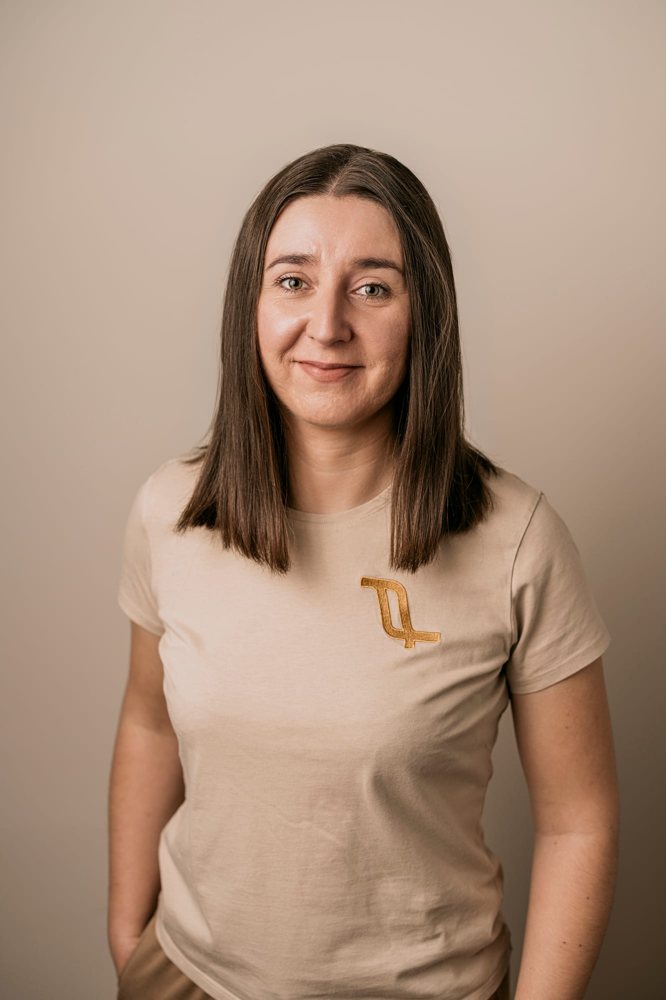
She leads the physiotherapy team at Zelendur and the physiotherapy assessment on admission, on which the personal exercise and therapy plan is based. She has many years of experience working with neurological patients and focuses in particular on neurorehabilitation and robotic rehabilitation devices, for several of which she is also an instructor. In her work she emphasises an individual approach and a relationship with patients built on trust, with the aim of the greatest possible independence and quality of life.
Biography and articles →Next content review: 18 May 2027. This text is for information only and does not replace an examination by a doctor.
Sources
- Mehrholz J. et al., Electromechanical-assisted training for walking after stroke, systematic review (Cochrane, 2020): cochranelibrary.com
- Stroke rehabilitation in adults, guideline NG236 (NICE, 2023): nice.org.uk/guidance/ng236
- Falls, assessment and prevention in older people and in people 50 and over at higher risk, guideline NG249 (NICE, 2025): nice.org.uk/guidance/ng249
- Rehabilitation, fact sheet (WHO): who.int/news-room/fact-sheets/detail/rehabilitation