
What to bring to rehabilitation: before you arrive
Good preparation makes the first days of your stay easier, both for you and for the team. Before you arrive, we will send you a simple list of records, medicines, clothing, footwear and personal items. Here we give an overview of what is most often needed, so that you can prepare in good time.
Medical records
- your hospital discharge letter and specialist reports
- imaging reports (X-ray, CT, MRI), if you have them
- your surgeon's instructions on weight-bearing, precautions or a brace
- your health insurance card and an identity document
- a list of chronic illnesses, allergies and previous operations
We will tell you which records are needed for your particular case after our first conversation.
Medicines
- the medicines you take regularly, in their original packaging
- a list of your medicines with how to take them as prescribed by your doctor
- medicines to prevent thrombosis, if they were prescribed after your operation
Do not change or stop your medicines on your own. During your stay, the team takes care of your medication.
What to bring: clothing, footwear and aids
Clothing
- comfortable exercise clothes: a tracksuit or trousers that are easy to put on, T-shirts
- looser clothing that does not press on the operated area and slips easily over a dressing or brace
- pyjamas, underwear and socks for several days
- a warmer jacket and hat for walking outdoors in the colder months
Footwear
Footwear is a matter of safety, not just comfort. Falls often happen precisely because of unsuitable footwear.
- closed shoes with a heel counter that holds the foot and non-slip soles, ideally with Velcro fastening, for therapy and walking
- sliders with non-slip soles for the pool and shower
- avoid backless slippers and shoes with slippery soles
For the pool
- a swimming costume
- sliders with non-slip soles
The list you receive before arrival says which pool equipment we provide. You can go into the pool once the doctor approves it, after the wound has fully healed.
Aids and personal items
- crutches, a walking frame, a brace or a prosthesis that you use
- glasses, a hearing aid and batteries, dentures and their cases
- toiletries
- your mobile phone and charger, a book or something for your free time
Leave valuables and larger sums of money at home.
The first day: admission
The first day is devoted to getting to know each other. Admission includes three assessments, each lasting about 45 minutes:
- Medical examination: the doctor reviews your records and your state of health and sets the goals of rehabilitation.
- Nursing assessment: the nurse assesses your need for nursing care, your risk of falling, the condition of your skin and wound, and your habits.
- Physiotherapy assessment: the physiotherapist assesses your mobility, strength, balance and walking.
Your personal therapy plan is drawn up based on these assessments. We set goals together, whether that is a first step without a walking aid or a return to activities you enjoy.
What a day looks like
Therapies are spread across the day according to your plan and abilities, Monday to Friday 8 am to 7 pm and Saturday 8 am to 3 pm. Sunday is for rest. You receive your schedule for the next day (when, where and with whom) the day before, so you know what to expect and can plan visits.
An example of a typical day:
| Time | What happens |
|---|---|
| morning | breakfast, morning personal care, ward round |
| late morning | first therapy block, for example individual exercise therapy and gait training |
| midday | lunch and rest |
| afternoon | second therapy block, for example therapy in the pool or physical modalities |
| early evening | lighter therapy or a walk, free time, visits |
| evening | dinner, rest |
Between therapies there is time for meals, rest, coffee and socialising. Rest is not wasted time: the body also recovers between exercises. Nursing care is available round the clock, day and night.
Family and visits
Family are welcome. Because you know your therapy schedule for the next day the day before, it is easy to fit visits around therapy and rest. If a family member wants to stay with you, this depends on the availability of hotel accommodation and is arranged at admission.
If someone in your household will help you at home with getting up, bathing or exercises, let the team know in good time. Preparation for going home starts early, and it is easier when the team knows who will support you at home and what your home is like.
Meals
The restaurant combines a professional, personalised nutrition-led approach with home-style cooking. Good nutrition with enough protein is part of recovery, because without it muscles have nothing to grow from. If you have special dietary needs, diabetes or allergies, mention them at admission.
The end of your stay
Preparation for going home starts in the first days of therapy. Towards the end of your stay the focus is on independence: stairs, longer distances, walking on the outdoor therapy terrain with slopes and uneven ground. You go home with clear instructions and an exercise programme to continue your recovery.
When to contact a doctor before you arrive
If in the days before your arrival you develop a temperature above 38 °C, redness or discharge from the wound, a swollen and painful leg or new severe pain, contact your own doctor or surgeon first, and then us. For sudden shortness of breath, chest pain or signs of a stroke, call 112 (the European emergency number) straight away.
Accommodation at Zelendur
Specijalna bolnica Zelendur in Samobor has 17 rooms in the 4-star hotel wing and 16 hospital rooms, single and double, all step-free, with wide doors and corridors for wheelchairs and adapted bathrooms. The hospital rooms are equipped with hospital beds. Family members can stay with the patient, depending on the availability of hotel accommodation. For an older person after a fracture, we give useful advice in our guide for families after a hip fracture.
If you are not sure what is best for you, get in touch: we will review your medical records free of charge and suggest the next step.
Frequently asked questions
What should I bring to hospital for rehabilitation?
Your medical records and discharge letter, your health insurance card and an identity document, the medicines you take regularly with a list, comfortable exercise clothes, closed shoes with non-slip soles, a swimming costume and your own walking aids. We will send you a list before you arrive.
What shoes should I bring to rehabilitation?
Closed shoes with a heel counter that holds the foot and non-slip soles, easy to put on, ideally with Velcro fastening. Backless slippers are not safe for walking and exercise. For the pool, bring sliders with non-slip soles.
Do I need to bring my own medicines?
Yes, bring the medicines you take regularly, in their original packaging, and a list of your medicines with how to take them as prescribed by your doctor. The team will take care of your medication during your stay.
What happens on the first day of rehabilitation?
On the first day you have a medical examination, a nursing assessment and a physiotherapy assessment, each lasting about 45 minutes. Your personal therapy plan is drawn up based on these. You will also get to know your room and the spaces where you will exercise.
Can a family member stay with me?
Yes, depending on the availability of hotel accommodation. Check whether a shared stay is possible when arranging your admission.
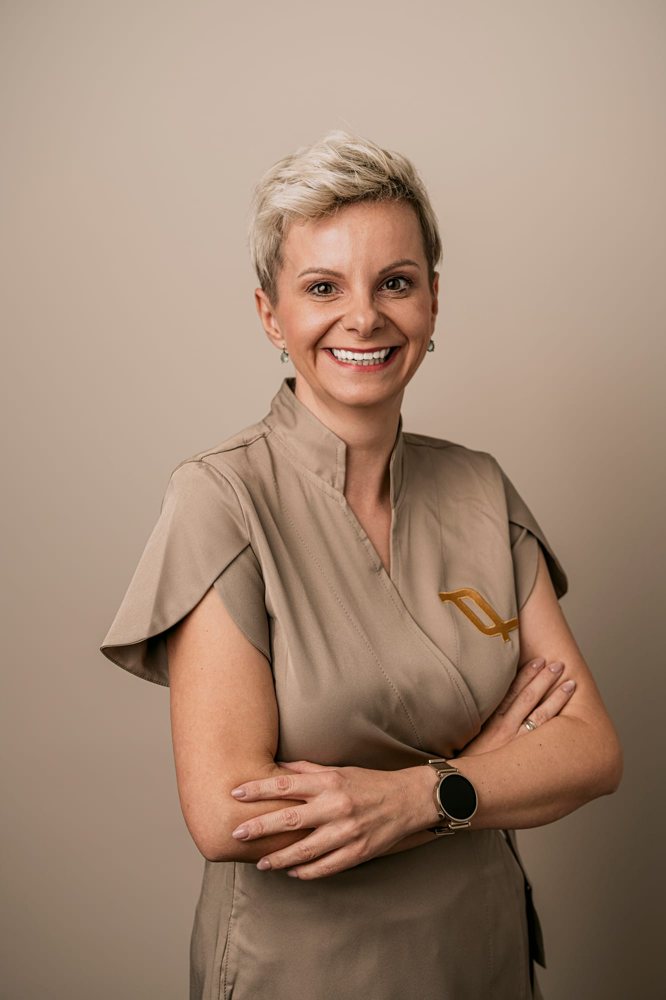
Bachelor of nursing and healthcare manager with more than 20 years of experience in primary care, hospital care and care homes for older people, in Croatia and Germany. At Zelendur she leads nursing care: admission and nursing assessment, round-the-clock care and preparing patients and their families for the return home. She has held management positions for the past ten years. Before joining Zelendur, she set up the nursing service of the newly opened Dom Sveta Barbara care home in Kupljenovo from day one, led a team of 25 staff and worked with physiotherapists on residents' rehabilitation. She initiated and led the digitalisation of nursing records and can also speak with patients in German and English.
Biography and articles →Next content review: 18 May 2027. This text is for information only and does not replace an examination by a doctor.
Sources
- Going into hospital, patient guidance (NHS): nhs.uk
- Falls, assessment and prevention in older people and in people 50 and over at higher risk, guideline NG249 (NICE, 2025): nice.org.uk/guidance/ng249
- OrthoInfo, preparing for joint replacement surgery (American Academy of Orthopaedic Surgeons): orthoinfo.aaos.org