
Rehabilitation after surgery: why it matters as much as the operation
The surgeon implants a new joint, repairs a ligament or fixes a broken bone. Strength, range of motion, balance and safe walking are restored by rehabilitation. That is why physical medicine follows a simple rule: a good operation must be followed by good rehabilitation.
The first weeks are especially important. As the team at Zelendur points out (Jutarnji list, 9 November 2026), the first weeks after a hip or knee replacement are crucial for the outcome. During this period scar tissue forms, the walking pattern settles in, and muscles weakened by years of pain either get stronger or stay weak. Whatever is missed then comes back slowly and with more effort later.
Rehabilitation does not begin only after discharge. It begins when you first get up in the surgical hospital, and ideally even before the operation, with targeted preparation of the body.
After which operations rehabilitation matters most
Hip replacement
An artificial hip is most often implanted because of advanced osteoarthritis or a fracture. The main goals are safe walking without a limp, strengthening the hip and thigh muscles, and following the movement precautions and your surgeon's instructions on how much weight to put on the leg in the first weeks. You will find a detailed stage-by-stage overview in our article hip replacement: recovery week by week.
Knee replacement
In the early stage, the knee recovers more painfully and more slowly than the hip. Mobility does not come back by itself: bending and, even more importantly, fully straightening the knee have to be practised in the first weeks. More in our article knee replacement: recovery week by week.
Cruciate ligament and knee arthroscopy
After anterior cruciate ligament (ACL) reconstruction, rehabilitation takes months, and the return to sport depends on measurable criteria, not just on time. Meniscus arthroscopy usually has a shorter recovery, but without targeted exercises the thigh muscles weaken quickly. See the cruciate ligament and returning to sport and exercises for the knee and shoulder.
Shoulder
After rotator cuff repair, shoulder stabilisation or a shoulder replacement, recovery follows strict stages set by your surgeon: first protection and passive movement, then active movement, and finally strength. Skipping stages can put the tendon repair at risk.
Fractures and spinal surgery
A hip fracture in an older person is a particular challenge, because besides the bone, independence has to be preserved and another fall prevented. We write about this in our guide for families after a hip fracture. After spinal surgery, rehabilitation is adapted to the type of operation and your surgeon's instructions.
Stages of recovery at a glance
The table shows the approximate course of recovery after a hip or knee replacement. Every recovery is individual, and this does not replace the instructions of your surgeon and your rehabilitation physician.
| Period | What happens | Main goal |
|---|---|---|
| Week 1 | getting up and first steps with a walking frame or crutches | controlling pain and swelling, getting up safely |
| Weeks 2 to 3 | the wound heals, the body responds well to exercise | range of motion and a correct walking pattern |
| Weeks 4 to 6 | moving from two crutches to one, then walking without aids | independence and stairs |
| Weeks 7 to 12 | the joint is stable, walking is safe | strength, balance and endurance |
| Months 3 to 12 | bone and muscles continue to adapt | full strength and return to activities |
What helps recovery
The foundation of every recovery is active exercise. Physical treatments can help with pain and swelling, but they do not replace exercise. A programme usually combines:
- Individual exercise therapy: exercises for range of motion, strength and balance with a physiotherapist, adapted to your stage of recovery.
- Gait training: correcting the walking pattern from the first steps and gradually putting walking aids aside. For patients who cannot yet walk safely, robot-assisted gait training can help.
- Continuous passive motion (CPM): a device that gently bends and straightens the joint within a set range after knee surgery.
- Therapy pool: once the wound has fully healed, the buoyancy of water takes load off the joint, making movement and walking easier to practise.
- Physical treatments: for example electrotherapy or cryotherapy, as assessed by the doctor.
- Isokinetic testing: objective measurement of strength in the operated and non-operated leg, which shows when it is safe to increase the load.
A home exercise programme is just as important as therapy in a facility. You will find examples of safe basic exercises in our article exercises for the knee and shoulder.
Before surgery: preparation shortens recovery
The strength you take into the operation is one of the important predictors of how quickly you recover. Targeted preparation in the weeks before the procedure is called prehabilitation: strengthening the muscles, learning to walk with crutches and preparing your home.
Before the operation, it is also worth deciding where to go afterwards. We compare the two options in our article inpatient or outpatient rehabilitation, and describe the most common mistakes that slow recovery in five mistakes after hip and knee surgery.
Pain and swelling: what is normal
Pain during exercise up to the point of discomfort is expected and does not mean that something is wrong. A good guide is how you feel the next morning: if pain and swelling are back to the level of the previous day, the load was appropriate. If they are worse, the next session should be gentler, and you should tell your physiotherapist.
Swelling is controlled with ankle pumps for circulation, keeping the leg raised, cooling and dosing walking correctly. In the knee it lasts longer than in the hip and can come back for months after a more demanding day. Take painkillers and medicines to prevent thrombosis exactly as your doctor prescribed, not on your own initiative.
Tiredness is also a normal part of recovery. The body uses a great deal of energy for healing, so rest between therapies, enough sleep and a diet with enough protein are part of the therapy, not a waste of time.
When to contact a doctor or emergency services straight away
Some signs, however, are not part of the expected recovery and need a quick response.
Call 112 (the European emergency number) immediately if:
- you suddenly feel short of breath, have chest pain or cough up blood (possible pulmonary embolism)
- after hip surgery you feel sudden severe pain, your leg looks shorter or turned, and you cannot put weight on it (possible dislocation of the replacement)
- you fall and cannot stand on the leg, or feel severe pain
Contact your surgeon or a doctor the same day if:
- your calf or whole leg is swollen, warm, red or painful (possible deep vein thrombosis)
- the wound is red or warm, cloudy fluid or pus is coming out of it, or its edges are separating (possible infection)
- you have a temperature above 38 °C or chills
- pain increases sharply instead of gradually easing
- you notice new numbness or weakness in the leg
Inpatient, outpatient or a spa?
After discharge from the surgical ward, recovery can continue at home with outpatient therapy or with a stay in a rehabilitation facility. An outpatient programme is a good choice after smaller procedures, for mobile patients with support at home. An inpatient programme brings more when intensity, supervision and care are needed, for example after a joint replacement, in older people or after operations on both sides.
How to weigh up the options, including the difference between a spa and a specialty hospital, is explained in our guide how to choose rehabilitation and in the article spa or specialty hospital.
How we do it at Zelendur
Specijalna bolnica Zelendur in Samobor is the first private specialty hospital for physical medicine and rehabilitation in Croatia. We do not perform surgery: our work is rehabilitation, and we are your surgeon's partner in continuing your treatment.
- Admission in three steps. A medical examination, a nursing assessment and a physiotherapy assessment, each lasting about 45 minutes.
- A personal plan. Two identical operations do not mean the same protocol. The plan is adjusted every day, and you get your schedule for tomorrow (when, where and with whom) the day before.
- Therapies throughout the day. Monday to Friday 8 am to 7 pm, Saturday 8 am to 3 pm, with rest between therapies.
- We measure progress. We track strength with isokinetic measurements, not just by impression.
- Equipment for every stage. CPM after hip and knee surgery, robotic systems for verticalisation and gait training, a 60 m² pool 1.30 m deep, a gym for sports rehabilitation and an outdoor therapy terrain with uphill and downhill slopes and uneven ground, as preparation for walking outside the hospital.
- Safety and accommodation. Round-the-clock nursing care, hotel-style rooms and hospital rooms without thresholds, with meals adapted to recovery.
Are you facing an operation or have you just been discharged from the surgical ward? If you are not sure what is best for you, get in touch: we will review your medical records free of charge and suggest the next step.
Frequently asked questions
How long does rehabilitation take after hip surgery?
For most patients, getting back to everyday activities takes three to six months, and full strength and endurance build up over as long as a year. Crutches or a walking frame are usually used for two to six weeks. The exact pace depends on age, your condition before the operation and the quality of rehabilitation, and it is set by your surgeon and your rehabilitation physician.
When can I walk without crutches after knee surgery?
Most patients move from two crutches to one at around the fourth week, and to walking without aids by the sixth week. This is not a rule but a guide. Walking aids are put aside when the physiotherapist judges that your walking is safe and correct, not according to the calendar.
Which exercises can I do at home after knee surgery?
In the early stage these are most often thigh muscle tightening, straight leg raises, heel slides and ankle pumps for circulation. Which exercises, how many repetitions and at what pace is decided by your physiotherapist, following your surgeon's instructions. You will find examples in our article on exercises for the knee and shoulder.
Do I need rehabilitation after knee arthroscopy?
Yes. Recovery after arthroscopy is usually shorter than after larger operations, but the thigh muscles weaken quickly and the knee tends to swell. Targeted exercises restore range of motion and strength and reduce the risk of problems coming back. The scope of the programme depends on what was done during the procedure.
When should rehabilitation start after surgery?
Rehabilitation begins in the surgical hospital, often on the day of the operation or the day after, when you first get up. An intensive programme brings the most benefit in the second and third week, so it is worth arranging it before the operation. That way there is no idle gap between discharge and your first therapy.
Is it normal for the knee to swell for months after surgery?
Mild swelling after exertion and a feeling of warmth can occur for several months after a knee replacement and gradually fade. It is not normal if the swelling comes on suddenly, the knee is red and hot, you have a fever or your calf is swollen. In that case, contact a doctor the same day.
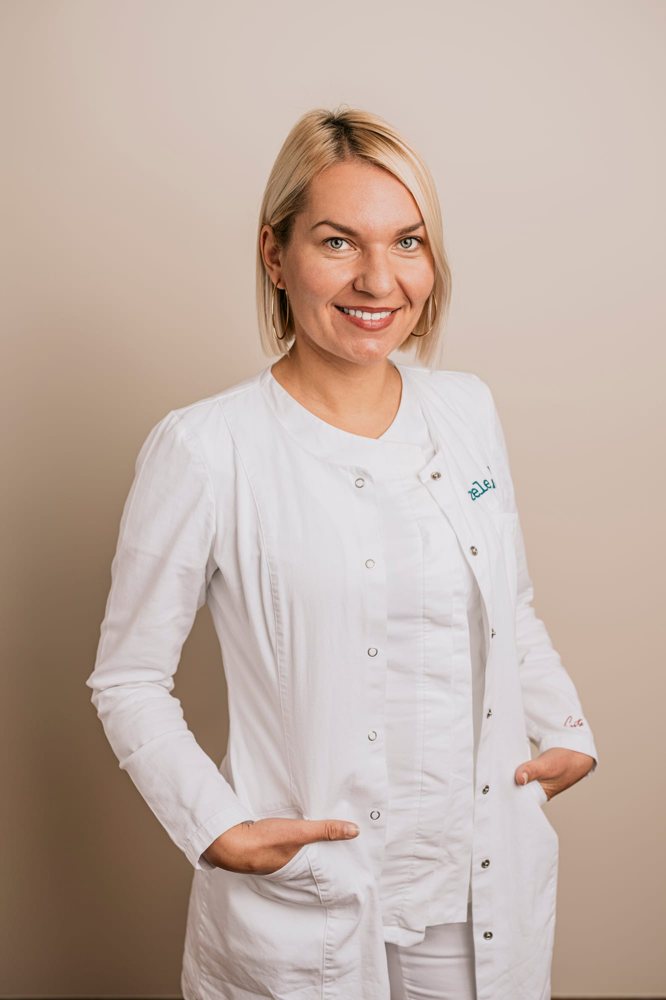
Specialist in physical medicine and rehabilitation with experience in rehabilitation after orthopaedic surgery and in diagnostic musculoskeletal ultrasound. Before joining Zelendur in 2026, she worked as a specialist at Topusko Health Resort (Lječilište Topusko). On this website she provides the medical review of expert articles.
Biography and articles →Next content review: 18 May 2027. This text is for information only and does not replace an examination by a doctor.
Sources
- Joint replacement (primary), hip, knee and shoulder, guideline NG157 (NICE, 2020): nice.org.uk/guidance/ng157
- Hip replacement, recovery (NHS): nhs.uk/conditions/hip-replacement
- Knee replacement, recovery (NHS): nhs.uk/conditions/knee-replacement
- OrthoInfo, patient information (American Academy of Orthopaedic Surgeons): orthoinfo.aaos.org
- Interview with the team of Specijalna bolnica Zelendur (Jutarnji list, 9 November 2026): jutarnji.hr