
What therapies in rehabilitation are and why the plan matters
Therapies in rehabilitation are treatments that restore mobility, strength, balance and independence after surgery, injury, illness or long-term pain. The World Health Organization describes rehabilitation as a set of interventions that help people be as independent as possible in everyday life, whether the cause is an injury, an operation or a chronic disease.
A single therapy on its own is rarely enough. Recovery depends on how therapies are combined, in what order and at what intensity, and how far the plan is adjusted as you progress. That is why the question “which plan is right for me” matters more than “which therapy is best”.
A good rehabilitation plan has three features: - it starts from an assessment: the doctor and physiotherapist establish what is limiting you (pain, weakness, stiffness, unsteadiness when walking); - it has clear goals: for example walking independently without an aid, climbing stairs or returning to sport; - it changes with progress: the therapies that are useful in the first days after surgery are not the same as those you need a few weeks later.
How the plan changes through the stages of recovery
Recovery after surgery or injury usually passes through several stages, although the boundaries between them are not sharp and differ from person to person.
- Early stage: the aim is to protect the operated or injured area, reduce pain and swelling, and start safe movement as early as possible. Gentle exercises, first steps with a walking aid, cooling and compression help here, and sometimes a device for passive joint movement.
- Middle stage: once pain and swelling ease, the focus shifts to strengthening the muscles, mobility, balance and walking. Exercises in water, more demanding individual exercises and strength measurement are added.
- Late stage: the aim is to return to everyday activities, work or sport. Exercises become more and more like real tasks: walking on uneven ground, stairs, carrying loads, running.
The order within the day also matters. Heat or manual therapy can come before exercise to make movement easier, and cooling can follow a more strenuous therapy.
Types of therapy: active therapies, manual therapy, physical modalities and measurement
Active therapies: the foundation of recovery
In active therapies you do the work, and the physiotherapist guides, doses and corrects. It is these therapies above all that bring back strength, mobility and confidence. Guidelines for back pain and osteoarthritis name exercise as the foundation of treatment.
- Individual exercise therapy: one-to-one exercises with a physiotherapist, from passive movements to strengthening, balance and gait training.
- Medical gymnastics: a guided exercise programme for strength, mobility, posture and balance.
- Therapy pool: hydrotherapy and exercises in water, where buoyancy takes the load off the joints.
- Robot-assisted verticalisation and gait training: the device supports the body and guides the legs through the walking pattern when walking independently is still difficult or unsafe.
Manual therapy
Manual therapy is treatment with the hands: the physiotherapist uses special techniques to move the joints and relax the soft tissues. For back pain, guidelines recommend it as an addition to exercise, not as a stand-alone therapy.
Physical modalities: help with pain and swelling
Physical modalities (often also called passive therapies) use electric current, sound, light, a magnetic field, heat or cold. They can relieve pain, swelling and muscle tension in the short term and so make exercise easier. The evidence for their effect varies from one modality to another and is limited for most of them. For example, the NICE guidelines for osteoarthritis do not recommend TENS, ultrasound, interferential current or laser, because there is not enough evidence of benefit. That is why the doctor includes them selectively and only as an addition to exercise.
| Therapy | What it does | Most often used for |
|---|---|---|
| Electrotherapy | mild currents to relieve pain and activate muscles | pain, muscle weakness after surgery |
| Therapeutic ultrasound | high-frequency sound waves in the soft tissues | painful tendons, bursae and muscles |
| High-intensity laser (HIL) | higher-power laser light | pain in muscles, tendons and joints |
| Magnetic field therapy | low-frequency pulsed magnetic field | osteoarthritis, spinal pain, after a fracture |
| TECAR therapy | radiofrequency energy that generates heat in the tissue | muscle and tendon injuries, sports injuries |
| Cryotherapy, thermotherapy and compression | cold, heat and pressure | swelling and pain after surgery, muscle tension |
| CPM | a device slowly bends and straightens the joint | early stage after knee or hip surgery |
Measuring progress
Isokinetic testing measures muscle strength in numbers: how weak a muscle is and how big the difference is between the left and right side. The results help to make training targeted, and a repeat measurement shows whether recovery is progressing.
Which therapies help with the most common conditions
Every plan is individual, but for certain conditions some combinations come up more often than others.
- After hip or knee replacement: early joint movement (sometimes with CPM), individual exercises and gait training, later exercises in the pool, while cooling and compression help with swelling. More in the articles hip replacement week by week and knee replacement week by week and in the guide Recovery after surgery.
- Back and neck pain: exercise as the foundation, manual therapy as an addition, and physical modalities only when the doctor judges that they may help. See the guide Back pain.
- After a hip fracture in older people: getting up early and gait training with a walking aid, strength and balance exercises and relearning everyday activities, while preventing further falls. More in the article hip fracture: a guide for families.
- Sports injuries and ligament surgery: individual training, isokinetic testing as one of the criteria for returning to sport, exercises in water and treatments to reduce swelling. See the article on returning to sport after cruciate ligament surgery.
If you would like to know what physiotherapy generally looks like and how long it lasts, read the guide Physiotherapy.
When therapy is not given and when to see a doctor straight away
Almost every therapy has situations in which it is postponed or replaced by another: for example infection and fever, an unhealed wound, an unstable heart condition, thrombosis, cancer in the treated area, pregnancy or an electronic implant (pacemaker). That is why therapy is always preceded by a medical examination, and your doctor decides whether a treatment is safe for you.
Some symptoms are not a reason for therapy but for an urgent examination. Call 112 (the European emergency number) immediately if you notice: - sudden weakness or numbness on one side of the body, a drooping corner of the mouth, difficulty speaking or sudden loss of vision (possible stroke); - back pain with loss of bladder or bowel control or numbness around the groin and genitals; - sudden chest pain or shortness of breath, especially after surgery.
Contact a doctor today if you have: - pain, swelling and warmth in the calf or thigh after surgery (possible thrombosis); - redness, warmth or discharge from the surgical wound, or a fever; - back pain with fever, unexplained weight loss, or after a serious fall; - inability to put weight on your leg or a visible deformity after a fall.
How we do it at Zelendur
Zelendur in Samobor is the first private specialty hospital for physical medicine and rehabilitation in Croatia. This is how your therapy plan comes together with us:
- Admission with three assessments: a medical examination, a nursing assessment and a physiotherapy assessment, each lasting about 45 minutes.
- A personal plan from day one, adjusted every day according to how you are progressing and how you feel.
- Your schedule the day before: you know in advance when, where and with whom you have therapies tomorrow.
- Therapies throughout the day: Monday to Friday 8 am to 7 pm, Saturday 8 am to 3 pm, with time to rest between therapies.
- Progress is measured, not just judged by impression, including by isokinetic testing.
- Equipment and facilities: a 60 m² therapy pool, 1.30 m deep, robot-assisted verticalisation and gait training (THERA-Trainer lyra), isokinetics (from December 2026), high-intensity laser, magnetic field therapy, electrotherapy, ultrasound, CPM, a gym for sports rehabilitation, an outdoor therapy terrain with uphill and downhill slopes and uneven ground, and facilities for rehabilitation after spinal injuries and amputations.
- Round-the-clock nursing care: nurses and nursing technicians are with you day and night, and you stay in the 4-star hotel wing or in hospital rooms, single or double, all step-free. Alongside therapies, we also take care of your nutrition in the restaurant, with a nutrition-focused approach.
Meet the team that leads your rehabilitation on the Our team page, and read more about your stay in the information for patients.
If you are not sure what is best for you, get in touch: we will review your medical records free of charge and suggest the next step.
Frequently asked questions
What types of physiotherapy are there?
They are usually divided into active therapies (individual exercise therapy, medical gymnastics, pool exercises, gait training), manual therapy and physical modalities such as electrotherapy, ultrasound, laser, magnetic field therapy, TECAR therapy, and cold, heat and compression. Measurements form a separate group, for example isokinetic testing of muscle strength.
What is the best therapy for back pain?
There is no single therapy that helps everyone. Guidelines recommend exercise and staying active as the foundation, with manual therapy as an addition to exercise. Physical modalities such as ultrasound or TENS are not recommended as a stand-alone treatment for lower back pain.
Who decides which therapies I will have?
Your therapies are decided by a specialist in physical medicine and rehabilitation together with a physiotherapist, after an examination and assessment. The plan changes as you progress, so some therapies are dropped over time and others are added.
How many therapies can I have a day?
That depends on your condition, fitness and stage of recovery. It is important to alternate effort and rest, so that your body can tolerate the therapy and recover. In inpatient rehabilitation, therapies are spread throughout the day, with breaks for rest.
Are passive therapies enough without exercise?
As a rule, no. Physical modalities can reduce pain and swelling in the short term and make exercise easier, but strength, mobility and confidence when walking come back through active work. That is why exercise is the foundation of almost every rehabilitation plan.
Are there therapies that must not be used with a pacemaker?
Yes. Electrotherapy, magnetic field therapy, TECAR therapy and some other modalities are generally not used in people with a pacemaker or other electronic implants. That is why it is important to tell the doctor everything about your implants and illnesses at admission.
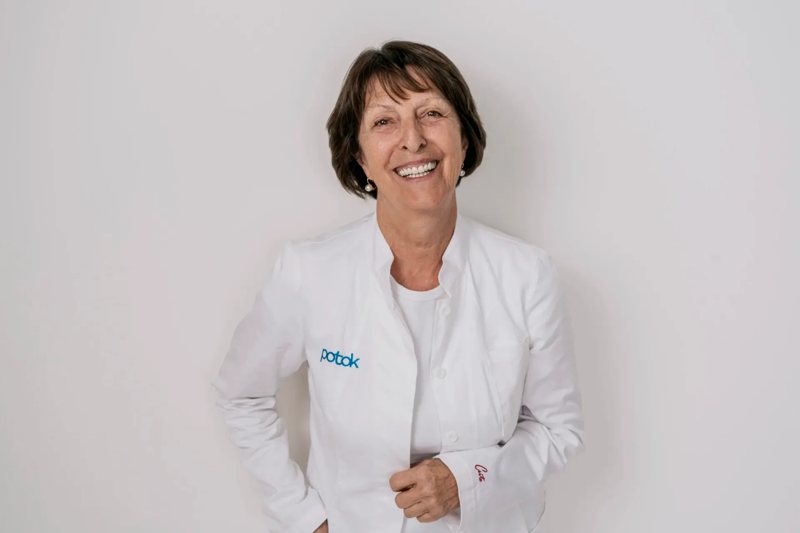
Specialist in physical medicine and rehabilitation with more than four decades of clinical experience. In 1995 she opened a private specialist practice, and in 2008 Poliklinika Potok in Sveta Nedelja, which she ran until December 2025. Her experience with outpatients and with patients from abroad led to the idea of Zelendur: a hospital where accommodation and rehabilitation are in one place.
Biography and articles →Next content review: 18 May 2027. This text is for information only and does not replace an examination by a doctor.
Sources
- Rehabilitation, fact sheet (World Health Organization, 2024): who.int/news-room/fact-sheets/detail/rehabilitation
- Low back pain and sciatica in over 16s, guideline NG59 (NICE, 2016, updated 2026): nice.org.uk/guidance/ng59
- Osteoarthritis in over 16s, diagnosis and management, guideline NG226 (NICE, 2022): nice.org.uk/guidance/ng226
- Exercise therapy for chronic low back pain (Cochrane, 2021): doi.org/10.1002/14651858.CD009790.pub2